

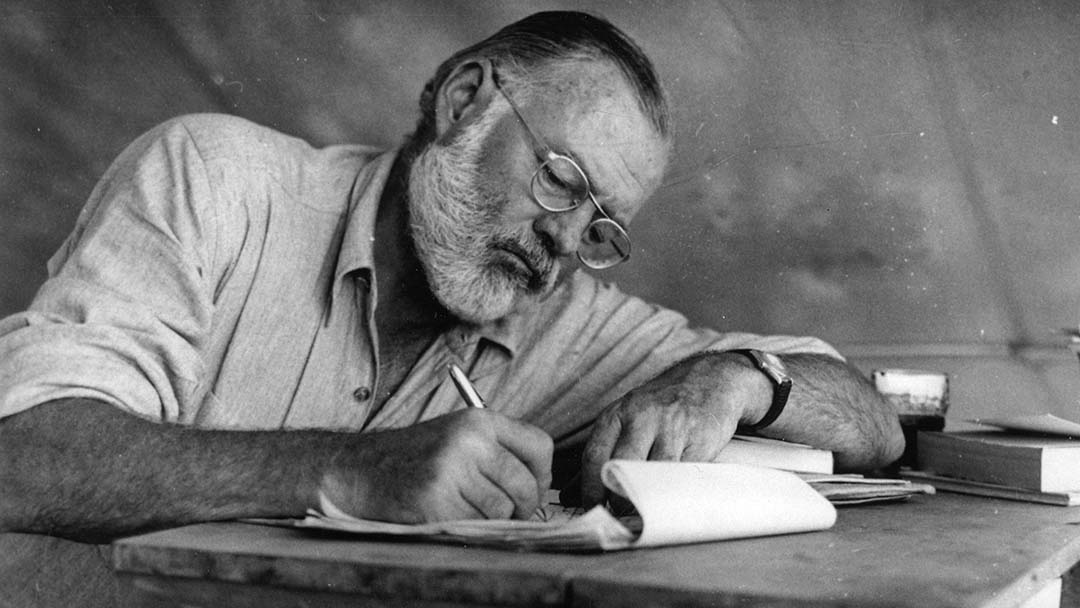
In the 1920s and 1930s, Ernest Hemingway discovered a vibrant, artistic, and literary Paris.
Living on the Left Bank, the writer frequents the cafés of the Latin Quarter, English-language bookstores, and brasseries where artists, journalists, and writers from around the world gather.
During the 1930s, Hemingway also stayed at the Hôtel Mont-Blanc Paris, in the heart of the Latin Quarter.
Just a short walk from the Seine and Notre-Dame de Paris, the hotel is located in one of the most iconic neighborhoods of Parisian intellectual life at the time.
Even today, you can still experience the atmosphere of Hemingway’s Paris by taking a walk through the Latin Quarter, Saint-Germain-des-Prés, and along the banks of the Seine.
Here is an itinerary for exploring Hemingway’s Paris in the heart of the Left Bank.
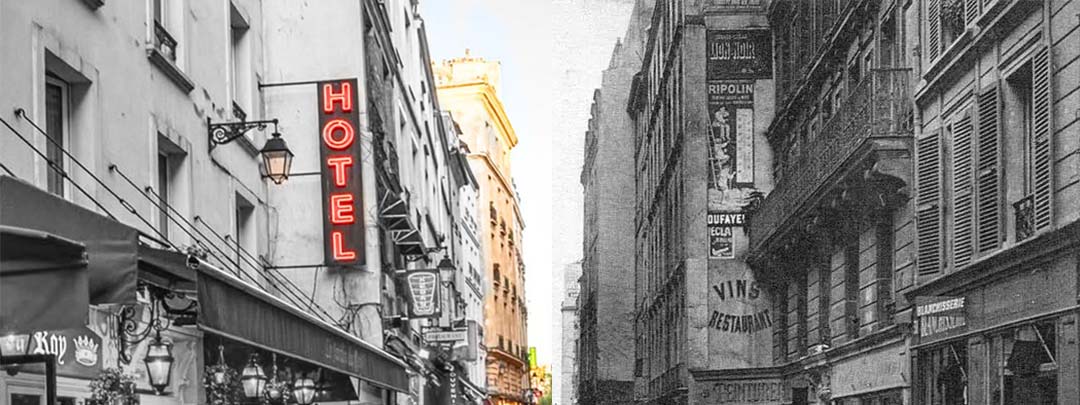
Start the walk on Rue de la Huchette
In the heart of the Latin Quarter, Rue de la Huchette still retainsthe lively, cosmopolitan atmosphere of old Paris.
It was in this neighborhood that Ernest Hemingway stayed during his visits to Paris in the 1920s and 1930s.
With its narrow, historic streets, cafés, and close proximity to the Seine, the neighborhood remains one of the most pleasant places to explore Paris on foot.
From Rue de la Huchette, several iconic sites associated with the writer are just a few minutes away.
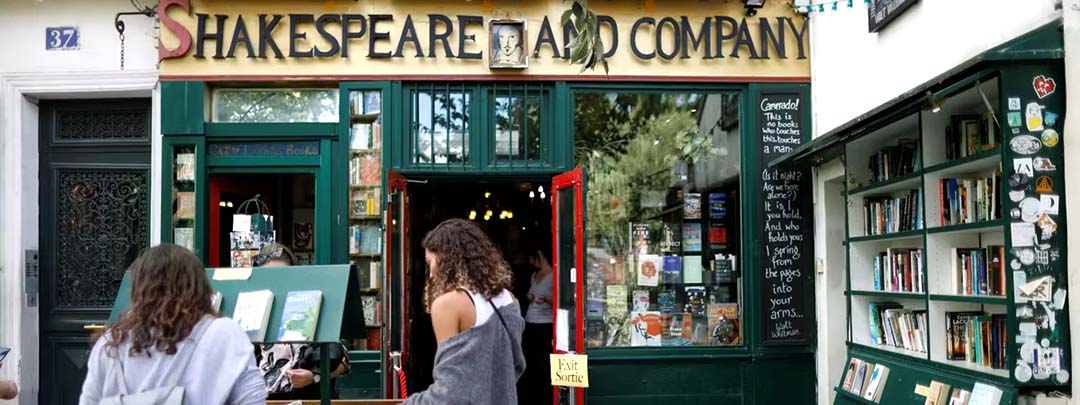
Shakespeare and Company, the legendary bookstore
It’s impossible to talk about Hemingway without mentioning Shakespeare and Company.
Located across from Notre-Dame de Paris, this famous English-language bookstore has become one of the symbols of literary Paris.
In the 1920s, Hemingway frequented the original version of the bookstore opened by Sylvia Beach, a leading figure in the American literary scene in Paris. At the time, she was supporting several writers of the “Lost Generation,” including Hemingway and James Joyce.
Today, the bookstore continues to attract readers, travelers, and literature enthusiasts from all over the world.
👉 Tip: If you come early in the morning, you can enjoy a quieter atmosphere around Notre-Dame and the banks of the Seine.
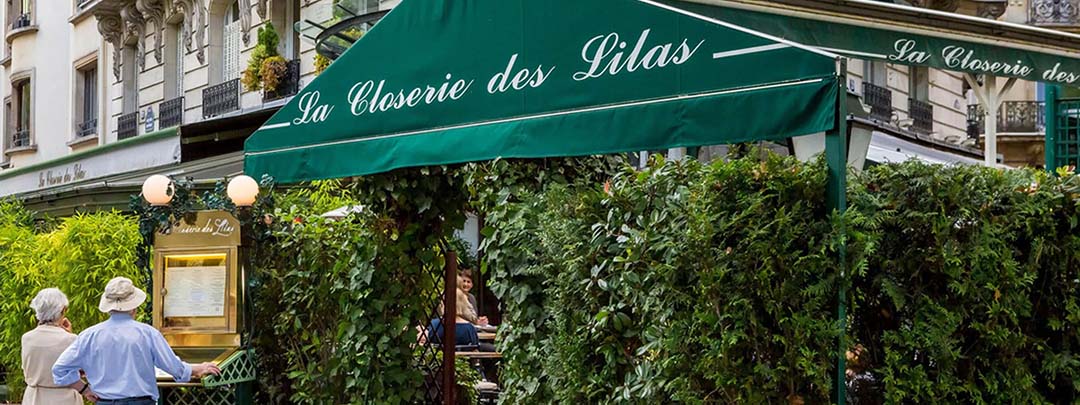
Stop by the Closerie des Lilas
Among the historic cafés most closely associated with Hemingway is La Closerie des Lilas holds a special place.
Located near the Jardin du Luxembourg, this legendary brasserie was one of the writer’s favorite spots, where he regularly worked on his manuscripts.
In *A Moveable Feast*, Hemingway recalls several moments spent in this café, which has become an icon of Parisian artistic life.
Even today, the place retains an elegant, literary atmosphere, which is especially pleasant on the terrace in the spring and summer.
Check out our guide 👉Literary Culture and Historic Cafés in the Latin Quarter
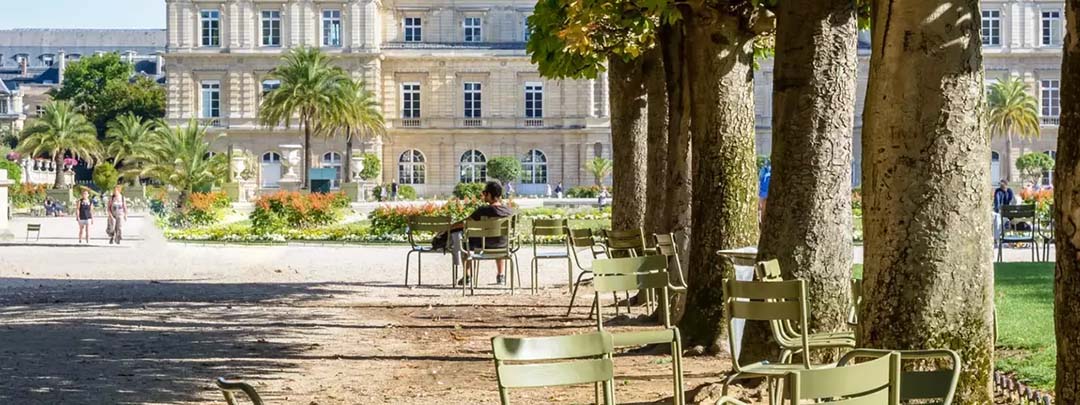
Walk through the Luxembourg Gardens
The Luxembourg Garden is one of the must-see spots for a stroll in Hemingway’s Paris.
With its shaded paths, statues, and famous green chairs, the garden offers a peaceful retreat in the heart of the Left Bank.
It’s also one of the best places to experience that timeless Parisian atmosphere that inspired so many foreign writers and artists in the 20th century.
Consulter notre guide 👉Visiter le Jardin du Luxembourg
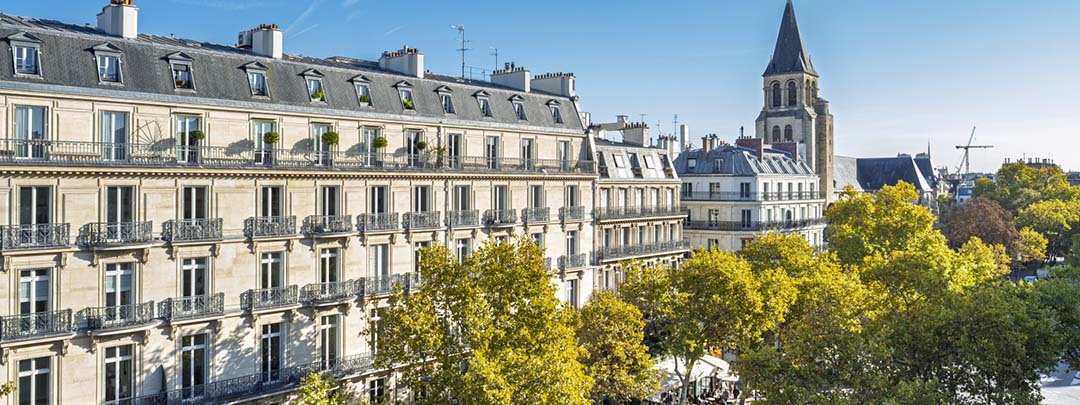
Explore Saint-Germain-des-Prés
As you continue your walk toward Saint-Germain-des-Prés, you’ll come across several of the cafés frequented by American writers and intellectuals of that era.
Today, the neighborhood remains one of Paris’s most iconic cultural hubs, featuring:
- its historic terraces
- its art galleries
- its bookstores
- its charming little streets
The atmosphere there is especially pleasant at the end of the day.
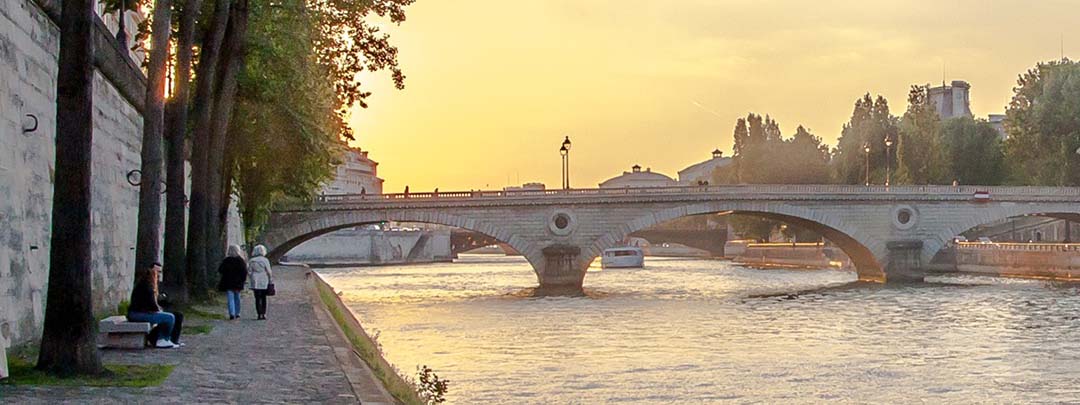
Stroll along the banks of the Seine
You can't truly experience Hemingway's Paris without walking along the banks of the Seine.
With its bookstores, historic bridges, and views of the Île de la Cité, this walk remains one of the capital’s most iconic.
At sunset,the atmosphere takes on a distinctly cinematic quality, reminiscent of the Paris depicted in *Paris Is a Party*.
Check out our guide 👉A stroll along the banks of the Seine
Why does Hemingway’s Paris still hold such a fascination?
Hemingway’s Paris still symbolizes today:
- artistic freedom
- Parisian literary life
- the cultural boom of the 1920s
- The Left BankLifestyle
More than just a stroll, this route offers a chance to discover a more intimate side of Paris, far from the usual tourist trails.
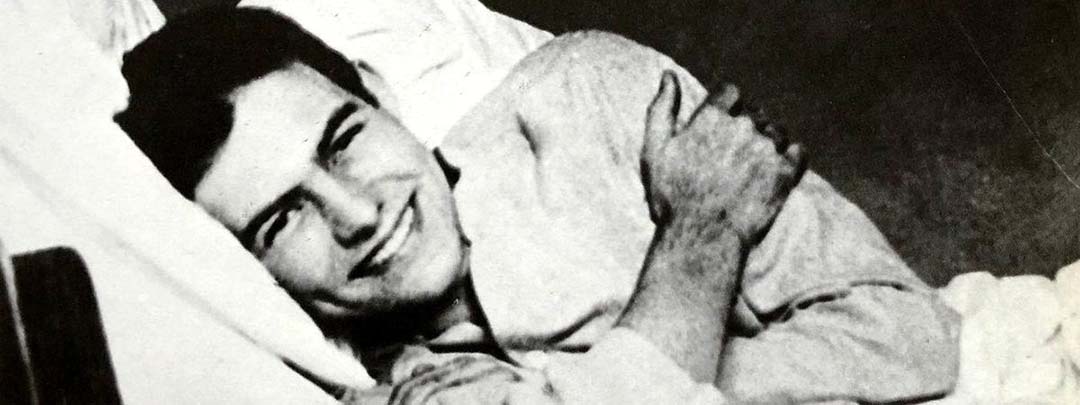
Staying in Hemingway's Paris
To explore Ernest Hemingway’s Paris on foot, staying in the Latin Quarter is the best way to experience the historic and literary atmosphere of the Left Bank.
Located on Rue de la Huchette, the Hôtel Mont-Blanc Paris itself hosted Hemingway during his stays in Paris in the 1930s.
Just a few minutes from Shakespeare and Company, the banks of the Seine, and the historic cafés of Saint-Germain-des-Prés, the hotel remains an ideal starting point for exploring literary Paris on foot.
Staying in the same neighborhood—and in the same place as Hemingway—allows you to discover another side of Paris: one that’s more intimate, artistic, and timeless.
❓ FAQ – Exploring Hemingway’s Paris on Foot
Where did Ernest Hemingway live in Paris?
In the 1920s, Ernest Hemingway lived on the Left Bank of Paris, mainly in the Montparnasse neighborhood, while regularly visiting the Latin Quarter and Saint-Germain-des-Prés.
What places associated with Hemingway can you visit in Paris?
Among the iconic places associated with Hemingway in Paris are Shakespeare and Company, La Closerie des Lilas, the Luxembourg Gardens, the banks of the Seine, and several historic cafés on the Left Bank.
Which of Hemingway's books is set in Paris?
In *A Moveable Feast*, Hemingway recounts his daily life in 1920s Paris, amid literary cafés, the art scene, and strolls along the Left Bank.
Where should you stay to explore literary Paris?
Staying in the Latin Quarter makes it easy to explore the main sites associated with Paris’s literary history on foot.
Located on Rue de la Huchette, the Hôtel Mont-Blanc Paris notably hosted Ernest Hemingway during his stays in Paris in the 1930s